

From lymphatic drainage tools to insulin pumps, the latest medical and wearable devices were showcased at the Med-Tech Expo 2026, where IDTechEx spoke with multiple companies making waves across the sector with their latest innovations. IDTechEx's portfolios of Healthcare and Wearable Technology Research Reports and Subscriptions cover some of the latest emerging trends and technologies.
The diverse scope of med-tech
The versatility seen across the med-tech, wearable, and wellness sectors is unlike any other, with devices to meet the most specific of demands having been displayed in the first week in June at the Med-Tech Expo. Facial massage and lymphatic drainage tools were amongst some of the trending wellness devices displayed by Cicor, a company offering services across the full value chain from design through to manufacturing. Cicor specializes in wellness, wearable, and medical products, with its portfolio also including a compact portable charging case for hearing aids, and breast pumps for one of the largest companies worldwide.
A glove fitted with an air pump to help with the opening and closing of the hand to assist stroke victims with physiotherapy was one product displayed by Forefront, a company that has worked on numerous medical devices. Forefront's other products include cold cap technologies for people going through chemotherapy and compression wraps, highlighting the diverse range of designs across the wearable and medical sectors.
Trends and bespoke designs
Miniaturization has recently been a huge trend across wearables and medical consumer devices. Companies such as Dyconex and Optiprint displayed their developments in PCBs for medical and implantable devices such as hearing aids and pacemakers, with their designs made to be discreet and streamlined. The reduction in size across a number of devices can allow for optimized, uninterrupted use and feel, and a more integrated aesthetic.
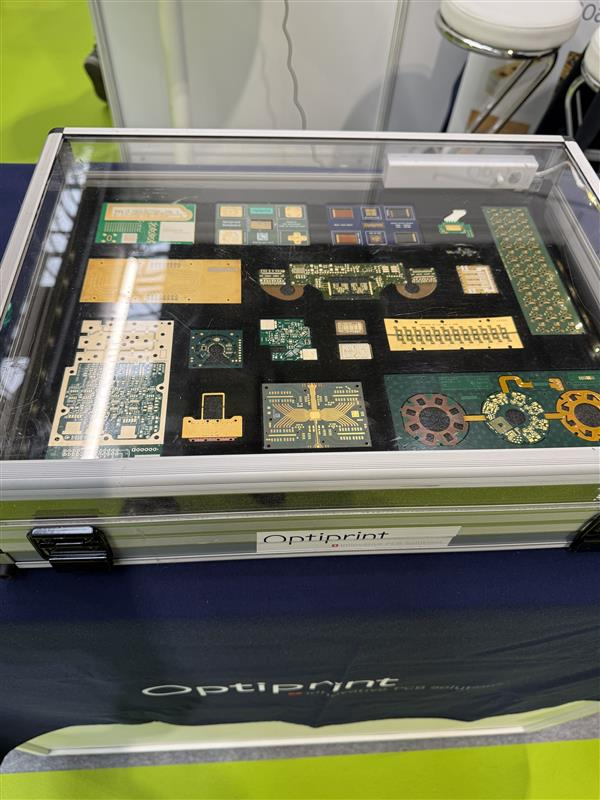
Optiprint at Med-Tech Expo 2026. Source: IDTechEx.
Customization opportunities are also increasingly prevalent within the medical sector. Lightweight, flexible, fast heater technologies by Backer Calesco can be fitted to shape and used in different sizes across incubators for babies, steam generators, and ventilators, to provide a simple and easy-to-use heat source across numerous applications.
Rapid fluidics operates on a real-life body scale, working with its customers to create specific anatomical models from CT scans for drug testing, embolic devices, and experiments with live cells, including a model of a kidney to demonstrate vascular structures. These models can assist with medical research and prototyping for the development of new devices.
Designworks, on the other hand, specializes largely in the wearable sector to create bespoke, customized wearable products, helping customers along the entire product development life cycle. Designworks' portfolio includes shorts that deliver electrical impulses to help with muscle training and incontinence, a stress hormone tracker that can be worn around the body, and a heart reader device in development designed to detect coronary artery stenosis. IDTechEx's report, "Wearable Sensors Market 2025-2035: Technologies, Trends, Players, Forecasts", also covers some of the most prevalent emerging wearable devices in the market.
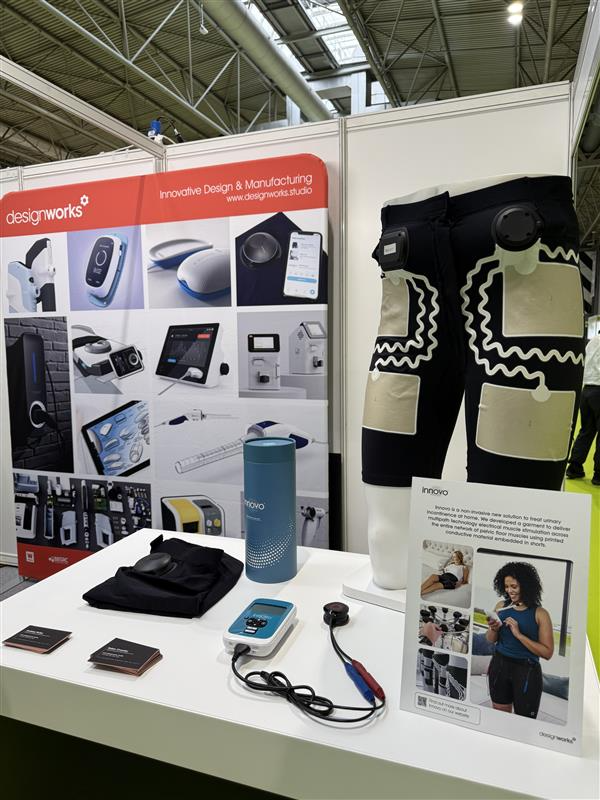
Designworks at Med-Tech Expo 2026. Source: IDTechEx.
Despite the wonderful scope of wireless wearables, safety for users will still need to be a top priority, which is why regulation and testing will continue to be at the forefront of many designs. Element, also present at the Med-Tech Expo 2026, is a test lab and certification body that helps manufacturers achieve legally sellable products that have undergone rigorous testing. When devices become wireless and designed to be carried for longer periods of time, there are added complexities, including an increased number of transmitters to allow for cellular, Wi-Fi, Bluetooth, and radio functionalities. While these features make devices all the more alluring, they also bring about a need for tighter regulations and a focus on customer safety.
The all-important sustainability focus
Designing products with an increased sustainability focus is also an emerging trend, with bio-feedstocks getting more attention in line with regulations and awareness around plastic waste ramping up. Raumedic was amongst the companies to be working on more environmentally friendly projects, wanting to introduce biopolymers into its products which include medical tubing, infusion pumps, syringe systems, ophthalmic appliances, and insulin delivery patch pumps. Given the harsh regulations surrounding the medical industry, switching to biopolymers can be tricky, as they must meet strict requirements, meaning many companies may find it hard to easily make these sustainable switches.
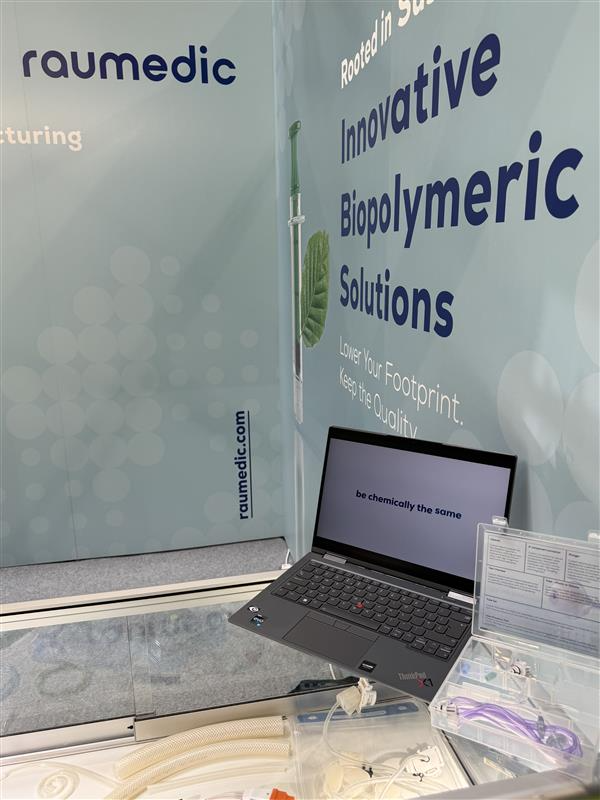
Raumedic at Med-Tech Expo 2026. Source: IDTechEx.
For more information on med-tech and wearable space developments, visit IDTechEx's portfolios of Healthcare and Wearable Technology Research Reports and Subscriptions for the latest research.
